Pain Is NO Joke™
Looking for a program that won't minimize your pain?
One that won't promise a quick fix and leave you to absorb everything on your own? You're in the right place.
You deserve a program that teaches you to understand your pain instead of manage it.
The problem? The science of chronic pain is made out to be too complex or too obscure; something there's no use in understanding.
Not here.
Join The GroupIt's time for your pain to stop being a mystery.
Decades of Pain Neuroscience Education research show us that teaching people how pain works can lead to less fear, more movement, less need for medical care, and better function.
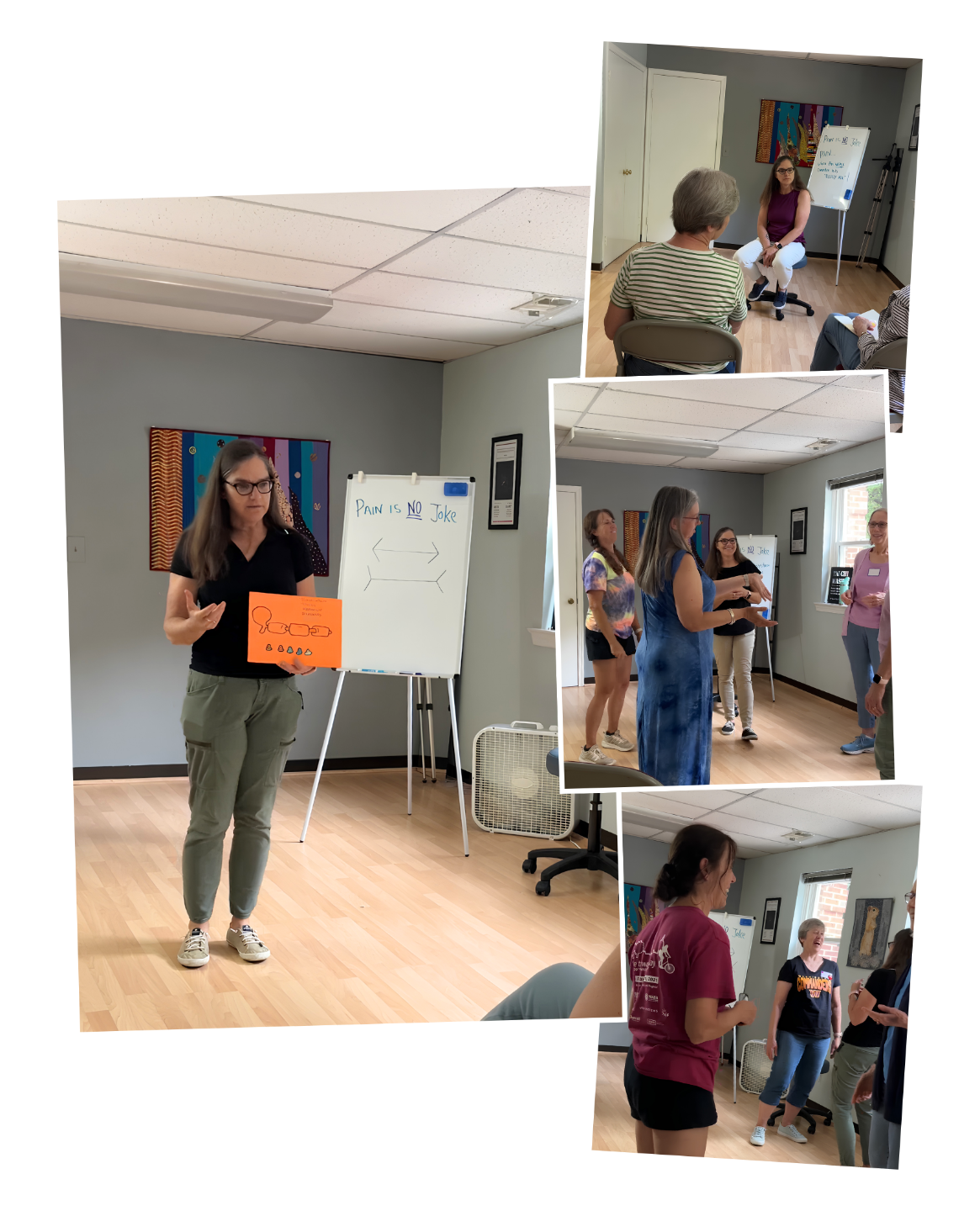
Pain Is No Joke™ is a 6-week-long educational program that teaches you all the things about pain you'll wish you had known sooner.

Join Virtually
$319 • Learn from anywhere
Mondays at 12pm EST,
November 16th - December 21st.
"I learned so much I did not know about how the brain perceives pain and how I can use that information to change my pain experience. Plus, it was fun!"
This program is designed for when...
→ your pain hasn't made sense and feels frustratingly random
→ your scans haven't given you an answer that fits what you feel
→ you've started avoiding movement, plans, and hobbies
Explore how your brain and body work together throughout your pain process, and watch simple demonstrations of strategies you can use to be in more control.
All in a fun and relaxing group environment filled with people who get it.
I'm in!
Why this unique method matters
A core finding of modern pain science is that pain is an output of your brain and nervous system. It does not always equal tissue damage. This program is built around that finding.
Here's how it's laid out:
🗓️
Week 1
How your nervous system functions as a high-tech alarm, and the role it plays in your pain.
🗓️
Week 2
The concept of spreading sensitivity, and how pain can act like a bad game of telephone.
🗓️
Week 3
The power of body language, tone, and intentional wording in calming sensitive nerves.
🗓️
Week 4
How your brain weights multiple inputs when deciding on an output, and how you can control those inputs.
🗓️
Week 6
Understanding that pain is not damage, and how widely interpretations shapes responses.
🗓️
Week 5
Stress, vigilance, and the power of choice; how our responses do not always match the scenario.
Meet your facilitator
Jen Uschold, Physical Therapist
Fellow of Pain Science, Physical Therapist, and pain science educator.
I've been a PT for 35 years now, and have spent most of those years working within the area of chronic pain. I help people rediscover safety, movement, and possibility in themselves.
I help you take your life back from pain.
More about Jen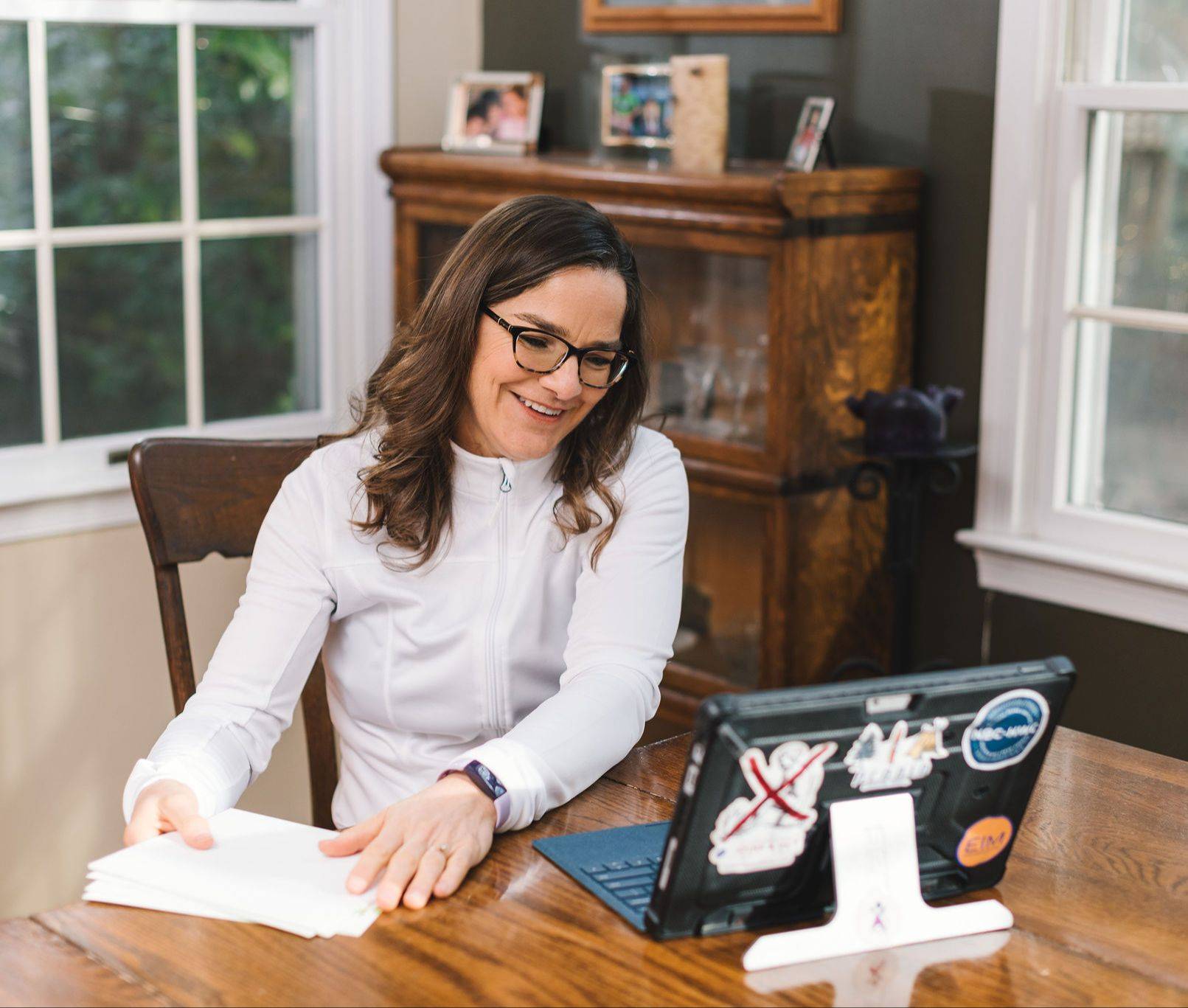
"Jen has an amazing way of helping us learn how pain works."
- K
"Jen has such a novel approach to dealing with pain."
- Tanya
If this is you:
→ chronic pain is interfering with your life
→ your pain comes and goes without pattern
→ you are afraid or cautious with movement
→ you're open to learning something new
...discover a new way to take control.
Looking for specifics?
How many sessions are included?
What is the structure of each session?
Is this a series of lectures?
What's the framework for this program?
Not available for this series?
In December, I'm partnering with TrueRest Float Spa to bring you Pain Is No Joke™ AND relaxation!
On top of joining the series, you'll get a 3-session package to TrueRest and save $$ in the process.